Video Ad Networks for Publishers in 2026
The version of this list we published in 2024 had ten networks on it. Several have since been renamed, merged or shut down, one stopped offering monetization to publishers at all, and the words the list used to describe video ads now mean something different to the people buying them.
So this is a rewrite rather than an update. It starts with the definitions, because they decide which of these platforms you can actually use and what buyers will pay for your inventory.
Instream, accompanying content and outstream
For years “instream” meant any video ad that played inside a video player, and plenty of sites with a small muted player floating beside an article sold that inventory as instream. Buyers paying instream prices were getting something else.
In March 2023 the IAB Tech Lab released new placement definitions in OpenRTB 2.6, carried in a field called plcmt, and Google adopted them for AdSense, Ad Manager and AdMob from 1 April 2024. There are now four types:
| Placement | What it is | Typical site |
|---|---|---|
| Instream | Ads before, during or after video the visitor chose to watch, with sound on by default or clear intent to watch | Video sites, video pages with a main player |
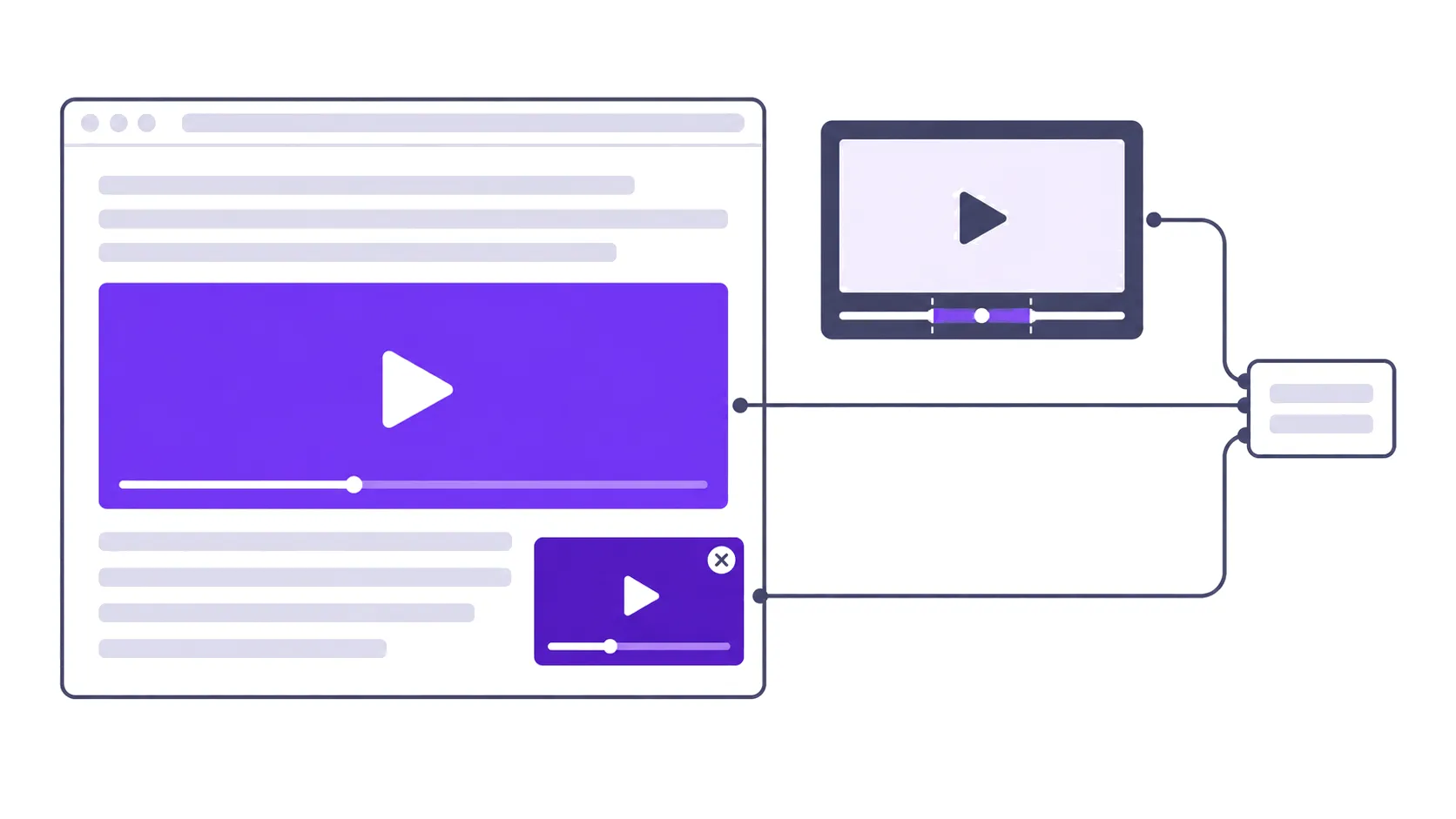
| Accompanying content | A player showing video alongside the page’s real content, muted, starting only when it scrolls into view | Articles with a player between paragraphs or pinned to a corner |
| Interstitial | A full-screen video ad between pages or screens | Apps, some mobile web |
| Standalone | A video ad with no video content around it, in a normal ad slot | A video ad in a sidebar or in-article slot |
What most people call outstream is the last two, plus accompanying content when the player carries its own content.
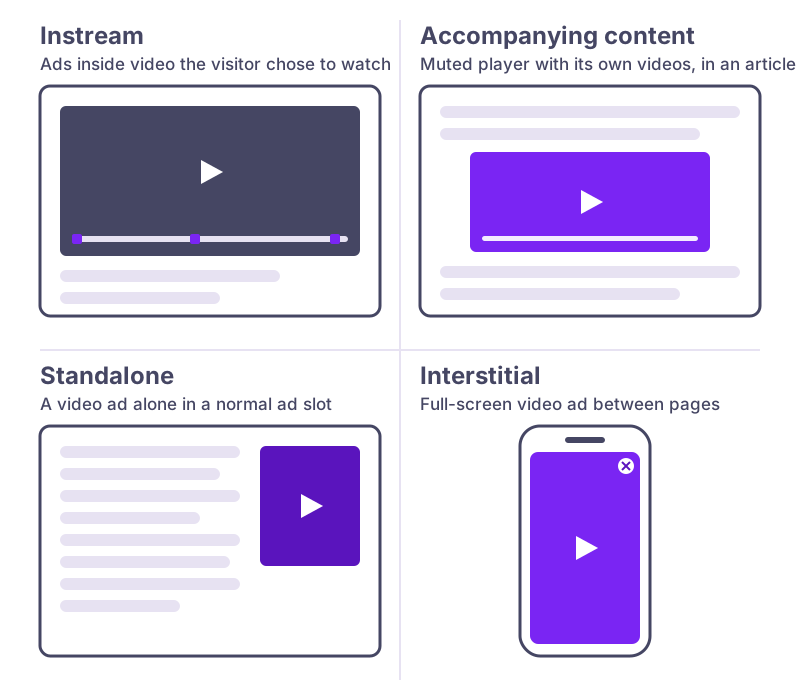
The practical point: if your site is mostly text, your video inventory is not instream, whatever a vendor’s pitch deck says. Google requires publishers to declare placement type and whether ads play with sound, and demand-side buyers filter on the plcmt field. Buyers can include or exclude inventory by placement type, so declaring it correctly is what keeps you in their campaigns.
Which kind you can run
If you publish your own video, you can sell true instream. You need a player that supports ad breaks, usually through Google’s IMA SDK or a VAST-compatible player, and a supply-side platform or network to bring the demand.
If you publish text and images, you’re in accompanying content or standalone territory. Either you let a vendor put a player with its own video library on your pages, or you run standalone video ads in slots you’d otherwise fill with banners. The first creates more ad breaks, because the player keeps running a playlist while the visitor reads. The second is simpler and doesn’t add a content player your readers didn’t ask for.
Video ad platforms worth looking at in 2026
None of the companies below publishes a traffic minimum for video, so expect a sales conversation rather than a sign-up form, except where noted.
JWP Connatix is what JW Player and Connatix became when they merged in October 2024. JW Player brought the streaming player, Connatix the in-article video and ad technology. At the merger Connatix said it worked with more than 350 publisher groups. It suits publishers who want one vendor for the player, the content and the ads.
Primis runs a video discovery player: a unit that sits in the article and plays a playlist built from your own videos, its content library or both, with ads in between. Primis says it reaches 442 million monthly unique users and reports 76% ad viewability. The content library is the point for text publishers, since it gives you a player without producing video.
Aniview is a technology stack more than a network: a video ad server, an HTML5 player with native app SDKs, server-side ad insertion and a programmatic marketplace. It suits a publisher with an ad operations person who wants to run their own video auctions.
Teads is best known to publishers for its in-article video player. Outbrain completed its acquisition of Teads in February 2025 and the combined company took the Teads name in June 2025. It works through direct publisher partnerships and publishes no application criteria.
Google Ad Manager supports out-stream video in articles and feeds, muted by default and playing only when at least half the ad is in view. It is the natural choice if Ad Manager already runs your display inventory, and it brings Google’s demand without another vendor.
Microsoft Monetize and Nexxen SSP are supply-side platforms, relevant if you already run header bidding or work with a managed partner. Monetize is the old AppNexus and Xandr SSP. Nexxen SSP is what Unruly became.
PurpleAds (us) has a video unit that you add with a script in the <head>, the same way as our display and floating units. It is not open to every site: video demand partners approve each site first, and once approved the unit appears in the dashboard. Setup is in our help article on adding the video ad, and ads can take up to 48 hours to start.
If your site already works with a managed network from our ad networks comparison, ask whether it runs video for you before adding a separate vendor, since two video units from two companies on one page will compete for the same reader.
What happened to the networks on older lists
If you’re comparing this article with one written a few years ago, this is why the names don’t match:
- Verizon Media became Yahoo after its sale to Apollo in 2021, and Yahoo shut its SSP on 30 April 2023 to focus on its buying platform.
- AppNexus became Xandr, then part of Microsoft. Microsoft closed the Invest DSP on 28 February 2026, but the Monetize SSP, the part publishers use, continues.
- Unruly was folded into Nexxen when Tremor International rebranded in June 2023, and now operates as Nexxen SSP.
- AdPlayer.Pro still sells its player and ad server technology, but its site says that since 2023 it does not offer monetization services for publishers or operate a video ad network.
- Chocolate Platform was acquired by Silverpush in 2022 and now operates under that company.
Before you add a video player
Video is the heaviest thing you can put on an article page, so check four things first.
Page speed
A player that loads early pushes your text down and adds layout shift. Reserve the player’s space in the layout and load it lazily below the first screen.
One player per page
Google’s video policy allows at most one ad playing with sound per page and requires a way to dismiss sticky placements.
The Better Ads rules
The Coalition for Better Ads fails auto-playing video with sound on desktop and mobile, and fails sticky pop-out video players on mobile. A player that follows the reader down a phone screen is exactly that.
The comparison that counts
Measure revenue per session and pages per session for a few weeks with and without video. A player can raise ad revenue per page while shortening visits, and the second number is the one that decides whether it pays. Our guide to publisher metrics covers how to read both.